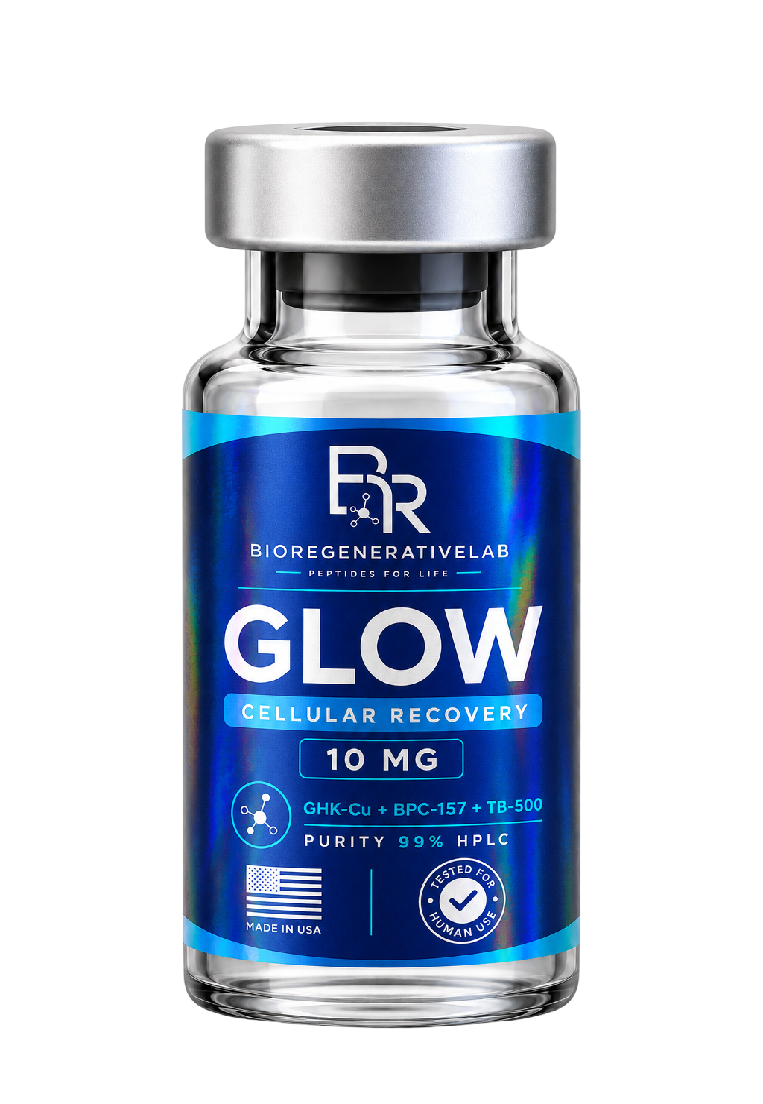

GLOW is a blend of three peptides—GHK-Cu, BPC-157, and TB-500—formulated into a single product designed for the study of tissue repair and regeneration at the cellular level. Each component plays a distinct and complementary role in this process:
GHK-Cu: A naturally occurring tripeptide that binds to copper ions and participates in the regulation of tissue repair, inflammation, and gene expression.
BPC-157: A peptide with soft-tissue repair and anti-inflammatory properties, mediated by nitric oxide signaling and the modulation of growth factors.
TB-500: A fragment of Thymosin Beta-4 that enhances cell migration and angiogenesis.
La regeneración celular ocurre en dos fases, y este blend está diseñado para cubrir ambas: movilización y proliferación. TB-500 favorece la polimerización de actina, lo que permite que células reparadoras clave fibroblastos, queratinocitos y células endoteliales migren de forma eficiente hacia el sitio que necesita repararse. BPC-157 complementa este proceso favoreciendo la formación de tejido de granulación y la proliferación de células epiteliales y del tejido conectivo una vez que esas células ya llegaron al lugar. El GHK-Cu, por su parte, aporta su rol conocido en la promoción de angiogénesis y producción de colágeno, esenciales para que el tejido nuevo se forme con una estructura adecuada. En conjunto, los tres péptidos aseguran que ocurran de forma coordinada tanto la llegada de las células reparadoras como su multiplicación y consolidación en tejido nuevo.
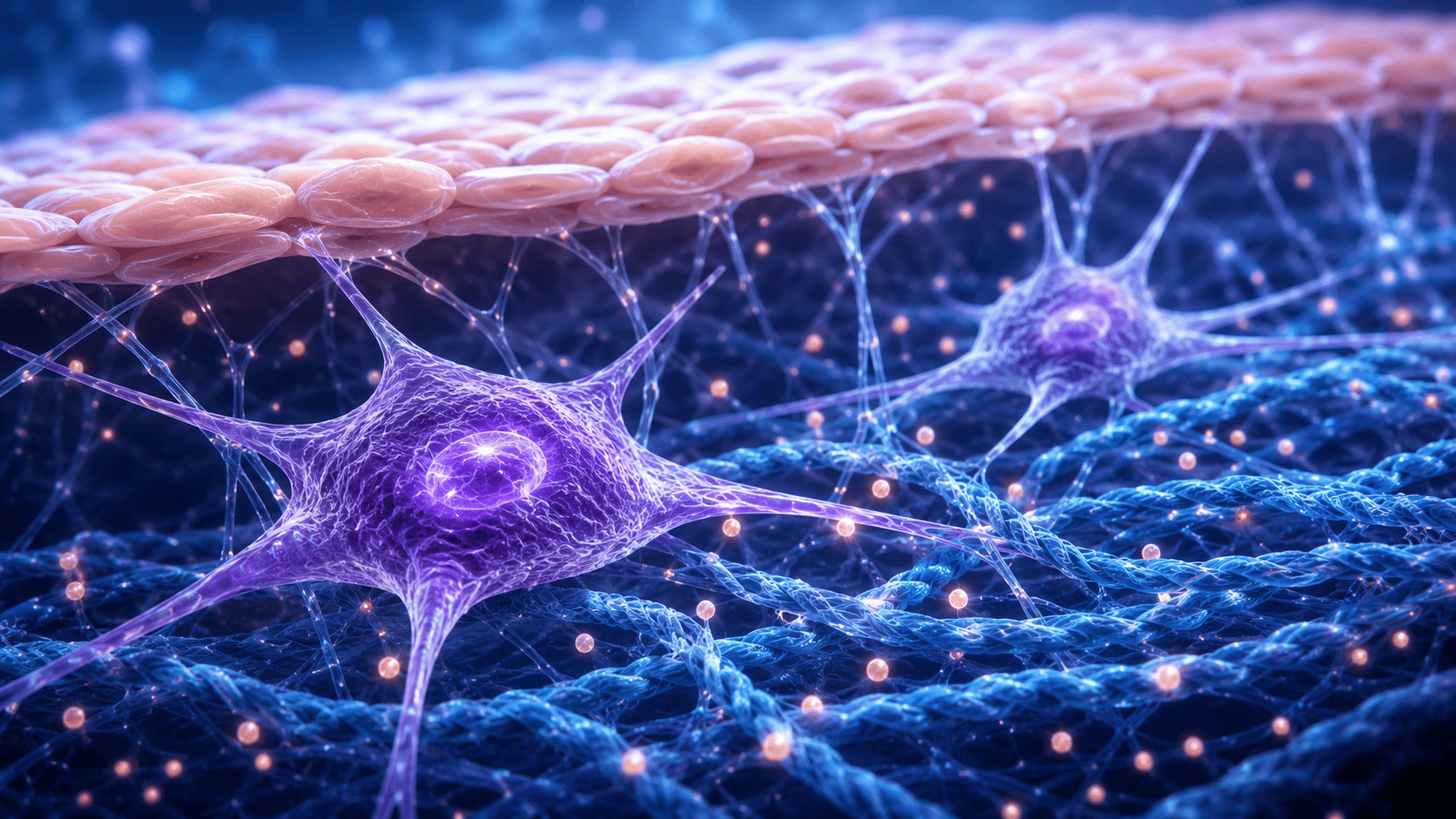

Increased collagen deposition, angiogenesis, and regulation of the oxidative stress response, observed in tissue models.

Increased decorin production and accumulation of glycosaminoglycans in skin fibroblasts—both key components of the "scaffolding" that supports regenerated tissue—observed in laboratory studies.

Modulation of inflammatory markers and fibroblast activity, fostering an environment more conducive to tissue repair.

Its design, featuring three complementary components, positions it as a comprehensive cellular recovery protocol, rather than one that acts on a single, isolated mechanism.
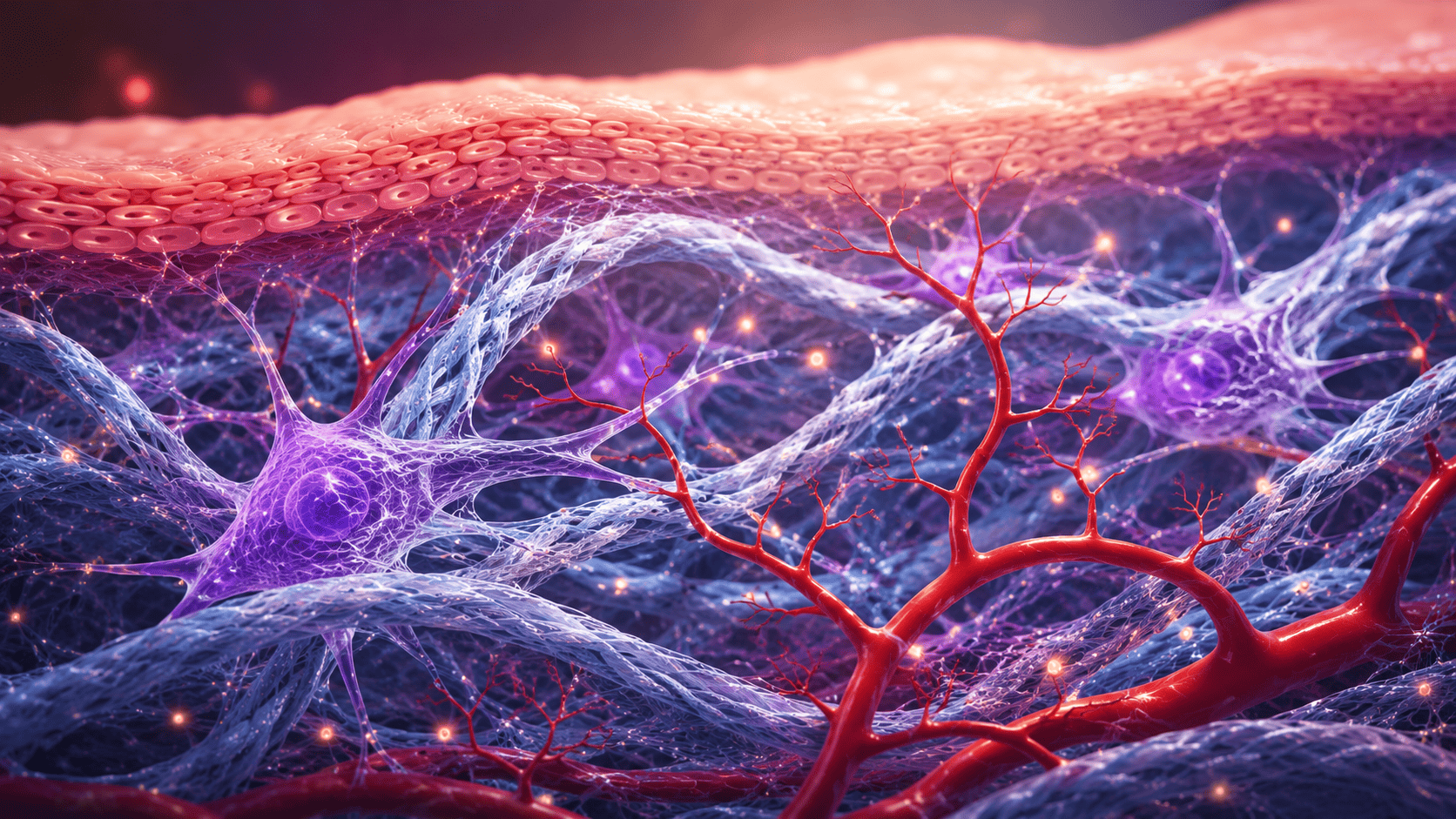
In research models (primarily animal or laboratory-based), measurable physiological changes regarding tissue repair and cell migration are typically observed within a 2- to 4-week window, depending on the specific experimental protocol. It is important to be transparent with the patient: this timeframe is derived from preclinical studies rather than human clinical trials involving this exact combination, so individual response times may vary.
At BioRegenerativeLab, this protocol is offered within an application model regulated and supervised by healthcare professionals. Available toxicological research using preclinical models has not demonstrated significant renal toxicity associated with BPC-157—one of the components of this blend—supporting a favorable safety profile in research settings. As this involves a combination of specialized peptides, administration takes place exclusively within a controlled medical protocol, following an assessment by our medical team.