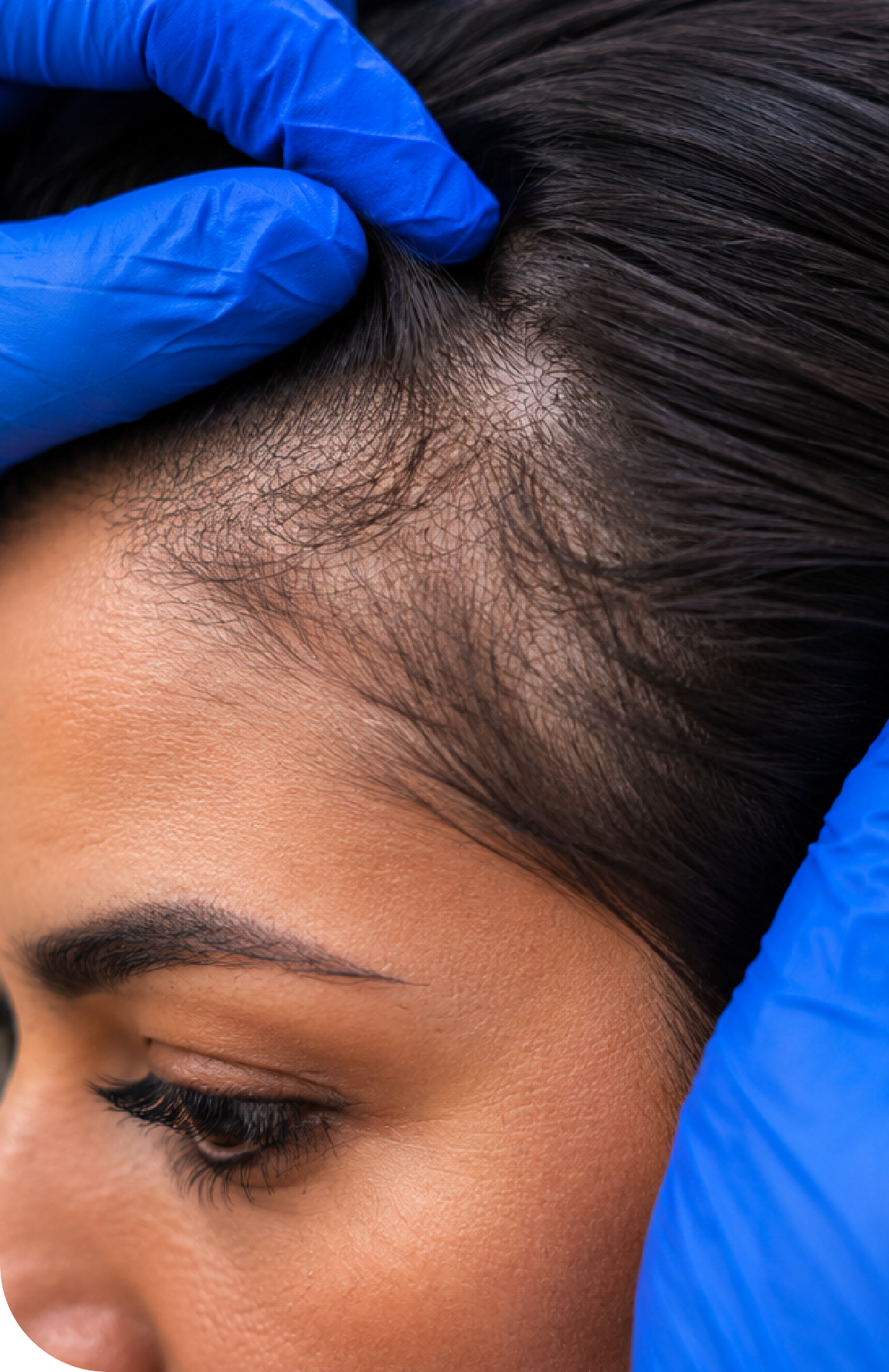
GHK-Cu (glycyl-L-histidyl-L-lysine copper) is a tripeptide—a small molecule composed of three amino acids (glycine, histidine, and lysine) bound to a copper ion—that occurs naturally in human plasma and is also released from tissues following an injury. It was discovered in 1973 by researcher Loren Pickart and has since become one of the most studied ingredients in hair care and hair growth formulas.
Copper-peptide acts as a biological signal that stimulates the growth and migration of various cell types, promotes the synthesis of collagen, elastin, proteoglycans, and glycosaminoglycans, and exerts anti-inflammatory and antioxidant effects. These processes are crucial for the hair follicle, as its ability to produce hair depends on the constant activity of surrounding cells and the structural support of the scalp.
At the genetic level, GHK-Cu has been shown to modulate thousands of human genes; this helps explain why its effect is not limited to a single pathway but rather influences multiple processes related to follicle regeneration.
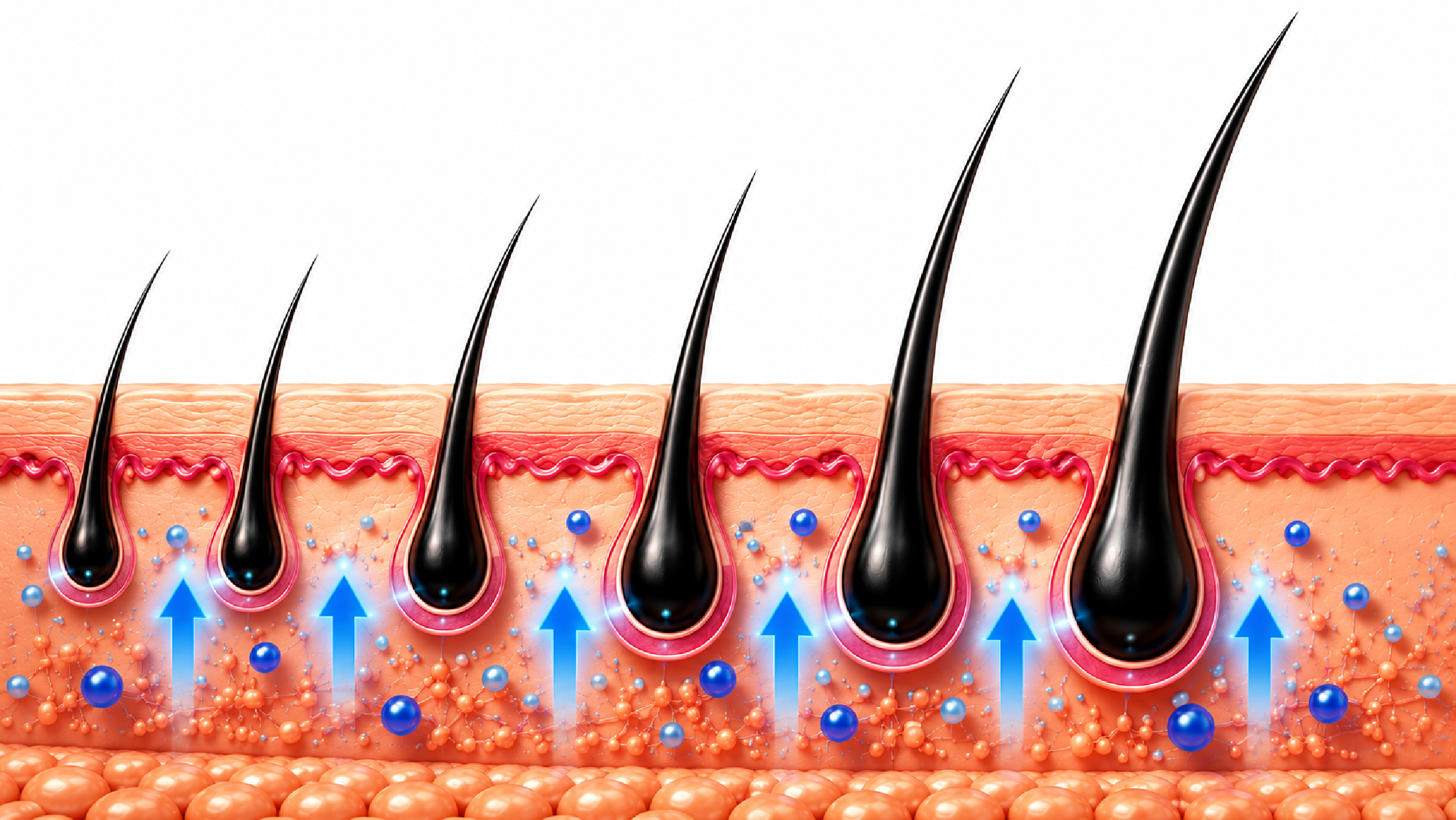

It boosts hair growth and thickness and increases hair follicle size, promoting a denser head of hair.

It stimulates cell growth and migration, which are essential for the continuous production of hair fiber.

It has anti-inflammatory and antioxidant properties, helping to maintain the scalp in better condition for hair growth.

It promotes the synthesis of collagen, elastin, fibronectin, and proteoglycans—proteins that support the structure of the follicle and the scalp.
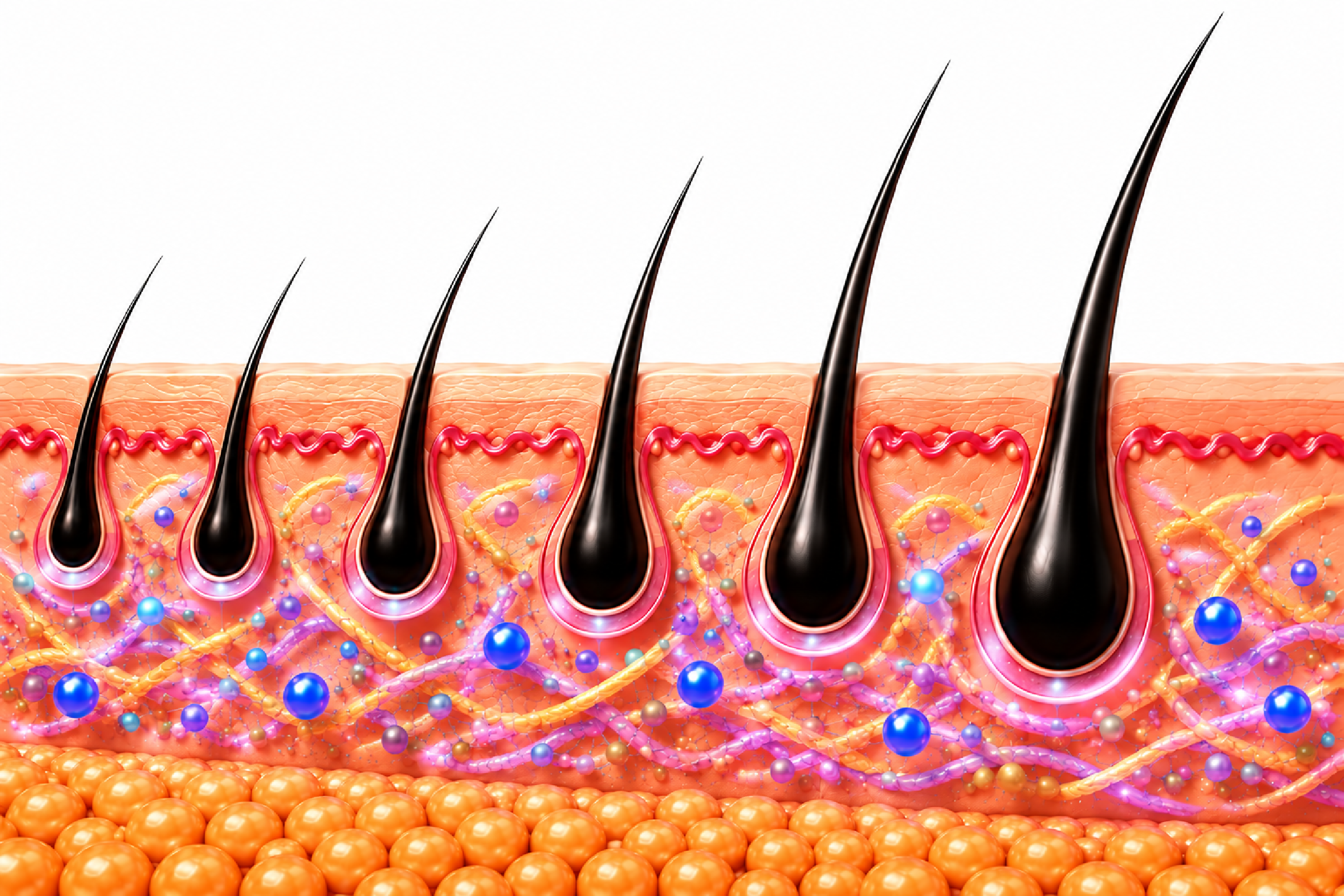
Hair growth products typically require 3 to 6 months of consistent use to show visible effects, as the hair growth cycle is naturally slow and gradual. Results are not immediate—they depend on cell renewal and the hair follicle cycle—making consistent use a crucial factor.
Topical use is well tolerated, with occasional reports of mild redness. Compared to growth factor therapies, GHK-Cu offers advantages such as greater stability in topical formulations and a lower risk of immunological reactions, making it a well-tolerated option for scalp application.
Nevertheless, as with any active product, it is recommended to perform an initial tolerance test and maintain realistic expectations regarding the biological timelines of hair growth.